Case study Google Ads (Shopping & Performance Max)
Turning a loss-making ad account into a profitable engine
anatomē is a London apothecary selling premium, science-led wellbeing through Shopify. Its Google Ads spent steadily but returned less than a pound for every pound spent. We fixed the audience first, then compounded the efficiency, and the channel went from loss-making to one of the brand's most profitable.
The challenge
anatomē is a London-founded apothecary built on aromachology, the science of how scent shapes mood. Its small-batch sleep oils, fragrances, supplements and skincare sit at the luxury end of wellbeing, sold through a Shopify store to the UK and beyond. Google Ads was meant to turn high-intent shoppers into customers at a return that justified the spend.
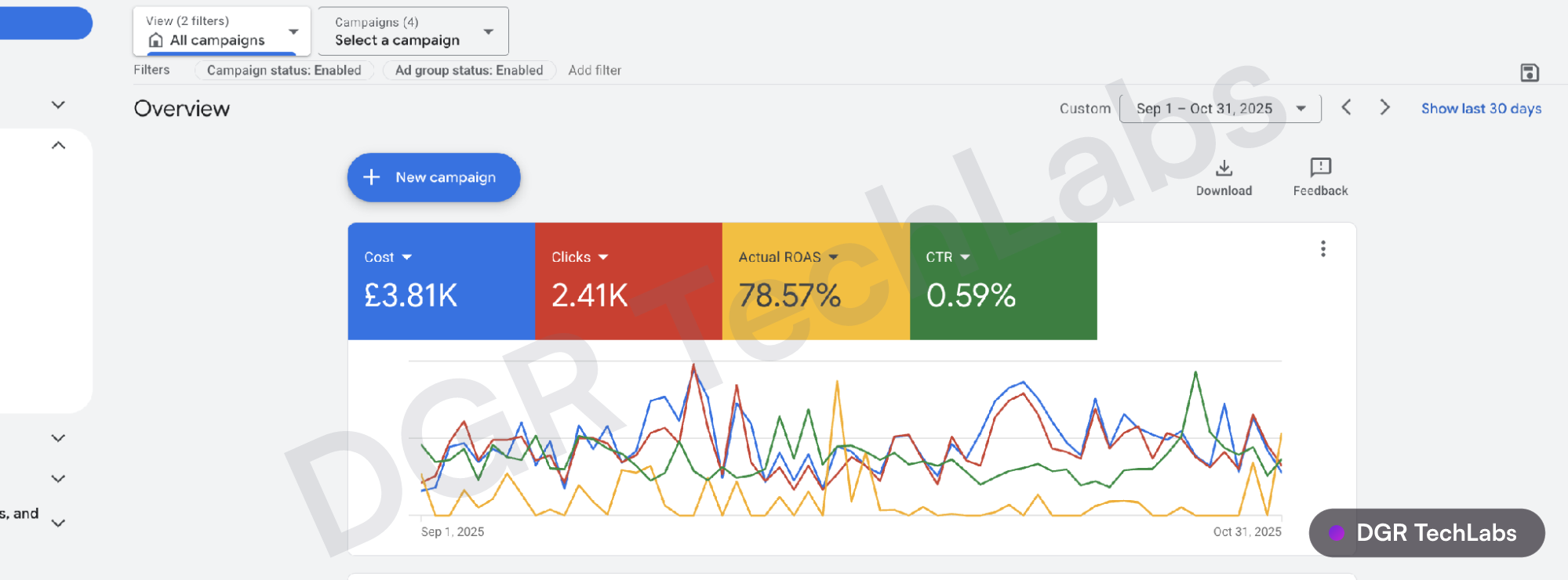
It was not. The account spent steadily but ran below break-even, returning less than a pound for every pound it cost. The root cause was the audience: budget was reaching casual browsers, gift-curious window shoppers and out-of-market users rather than the affluent, intent-driven buyer the products are built for. A click-through rate of 0.59% confirmed the ads were not landing with the right people.
Competing as a premium, science-led brand in a discount-heavy category, anatomē could not win on price. Precise audience targeting and premium messaging were not optional extras, they were the whole game.
What we did
- 01
Define the real luxury buyer first
We ran an in-depth audience study to pin down exactly who the anatomē customer is: their demographics, life stage, and the buying triggers (sleep, stress, self-care, premium gifting) that signal genuine intent. That persona became the foundation for every targeting and creative decision that followed.
- 02
Lean on first-party data, not deprecated lookalikes
With Google's similar-audience signals retired, we built Customer Match audiences from the client's own high-value purchasers, teaching the campaigns what a profitable customer actually looks like and seeding smarter automated bidding.
- 03
Refine the Performance Max and Shopping signals
We rebuilt the audience signals feeding Performance Max so the machine learning optimised toward the defined buyer from the start, then tightened product titles, descriptions and attributes in the Merchant Center feed so the right products surfaced for premium, high-intent searches.
- 04
Rewrite the creative for a premium buyer
We refreshed the responsive search assets and ad copy to speak to craft, science-backed formulation, and the brand's apothecary heritage. Better-matched messaging lifted click-through rate and ad relevance directly.
- 05
Bid to a profit target, and cut the waste
Once the audience and conversion data were clean, we moved to a Target ROAS bidding model so budgets had to clear a profitability threshold, and systematically excluded low-value audiences, bargain-seeking segments and irrelevant placements.
- 06
Test continuously and reallocate to what works
We aligned the ad messaging with the on-site experience to protect conversion, then kept testing audiences, creative and bids against statistical significance, moving budget toward the segments delivering the strongest, most profitable return.
The results
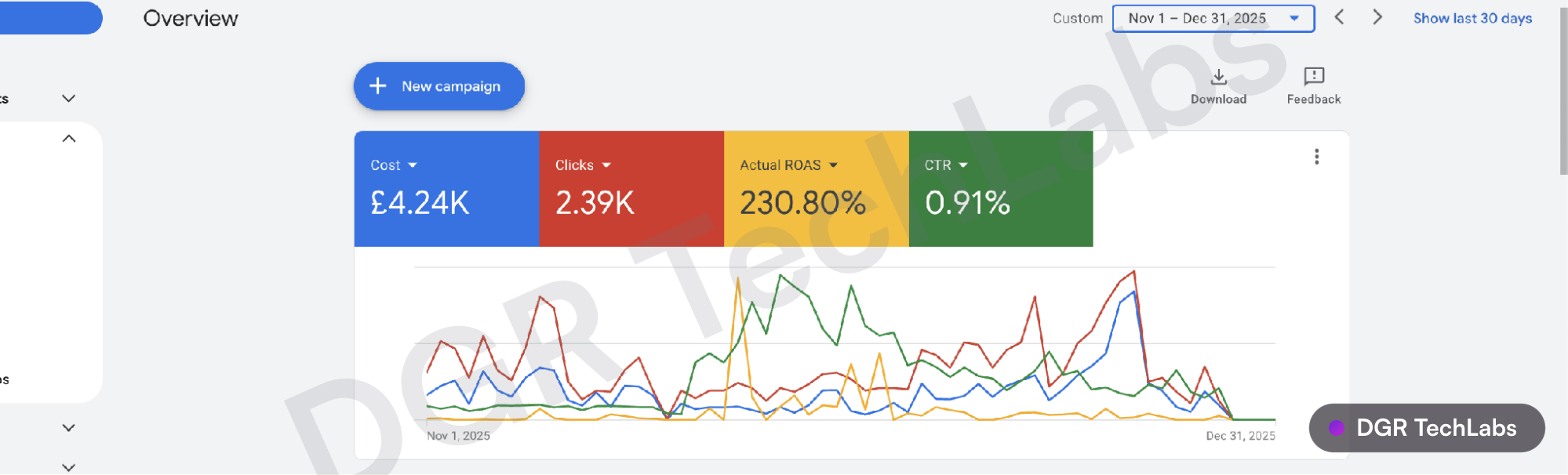
Solving the audience problem first, then compounding efficiency through bidding, feed and creative work, turned the account from loss-making to clearly profitable. Within the optimisation window, Actual ROAS climbed from 78.57% to 230.80%, a 193.7% increase. The account went from returning roughly £0.79 per £1 spent to a profitable £2.31, nearly tripling its return on effectively flat budget.
Every figure below comes straight from the client's own Google Ads account, comparing the two months before the work (Sep 1 to Oct 31, 2025) with the two months after (Nov 1 to Dec 31, 2025). Nothing is modelled and nothing is invented.
The evidence
Pulled straight from the client's own dashboards. Every figure is labelled with its source and date.
Want results like these for your business?