Case study Google Ads (Shopping & Performance Max)
Halving the cost of a sale while doubling the volume
Smiley Honey is a heritage Florida apiary selling its award-winning Tupelo honey through Shopify. Its Google Ads worked but had hit an efficiency ceiling that made growth risky. We rebuilt the account so efficiency improved as spend grew, nearly halving the cost of each sale while more than doubling traffic.
The challenge
Smiley Honey is a heritage American apiary, founded in 1989 in Wewahitchka, Florida, running its own hives, extraction and bottling on the Gulf coast. It is best known for Tupelo honey harvested from the river basins of Northwest Florida, certified Tupelo True and Fresh From Florida, and named Best Tupelo Honey by NBC Select in 2025. The brand sells a broad catalogue through Shopify, with more than 5,000 verified reviews and a loyal following.
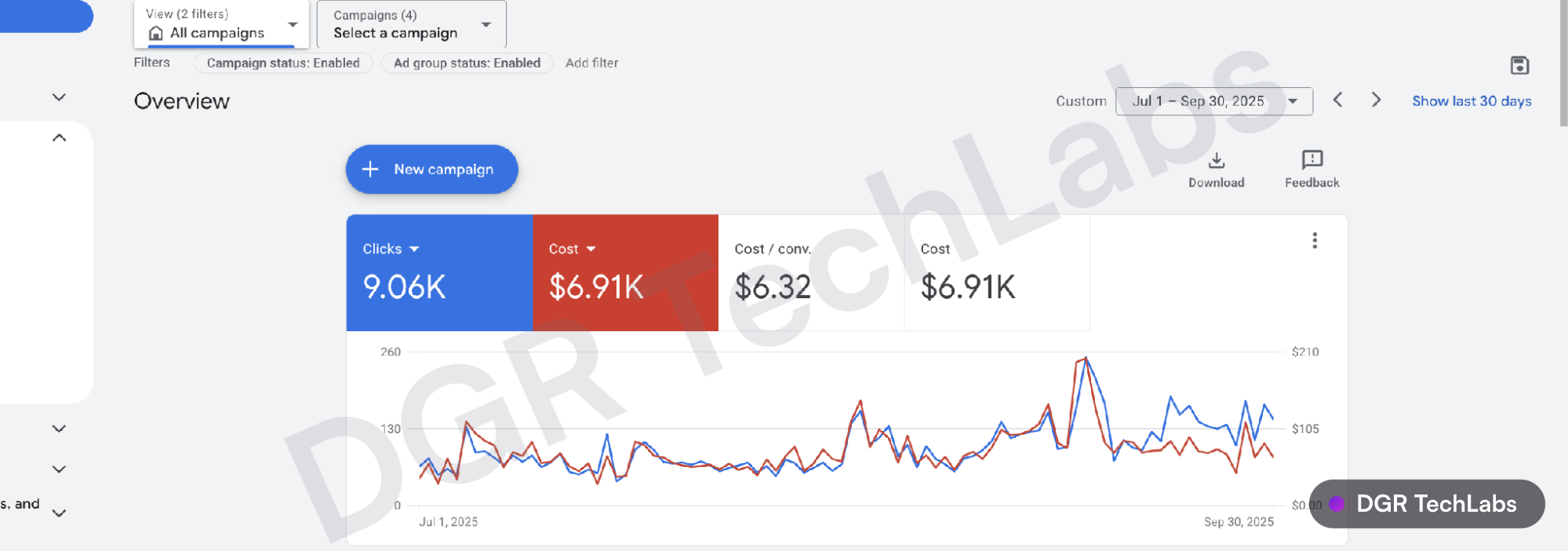
Its Google Ads were generating sales but had hit an efficiency ceiling. At a cost per conversion of $6.32, the account's economics left little room to scale: spend could not be increased confidently because the efficiency was not strong enough to justify it. Growth and profitability were pulling against each other.
Two things made it harder. The catalogue ran from $3 jars to premium gift sets, honeycomb and bulk, so without prioritisation, budget risked flowing to low-value products rather than the brand's best converters. And honey is a seasonal, price-competitive category where demand concentrates into the Q4 gifting window, which had to be captured with efficiency rather than won by outspending.
What we did
- 01
Concentrate budget on the products that convert
We optimised the Merchant Center feed (titles, descriptions, attributes and imagery) and prioritised the hero Tupelo range, honeycomb and gift sets, so budget concentrated on the products most likely to convert profitably instead of being spread thinly across the whole catalogue.
- 02
Switch to conversion-focused automated bidding
We moved campaigns onto Maximize Conversions and Target CPA, letting Google's machine learning buy the cheapest qualified conversions and drive cost per conversion down as data accumulated, then rebuilt Performance Max around proven buyers and high-intent honey queries.
- 03
Mine the search terms and cut the waste
Continuous search-term mining let us aggressively exclude informational, recipe-only and out-of-market queries that had been draining budget. Sculpting the negatives was one of the biggest levers in lowering cost per conversion.
- 04
Expand into high-intent demand
We expanded into bottom-of-funnel, purchase-ready search terms (variety-specific and buying queries) and layered in-market and first-party audiences, unlocking new volume without sacrificing efficiency.
- 05
Build a dedicated Q4 gifting push
We built a holiday-gifting campaign around honeycomb, gift selections and samplers, timed and budgeted to capture peak Q4 demand efficiently, and led the creative with the brand's strongest proof: the NBC Select award, the Tupelo True and Fresh From Florida certifications, and the thousands of reviews.
- 06
Reinvest the savings into scale
We aligned ad messaging with the right collection and product pages to protect conversion as traffic grew, then reinvested the efficiency gains into volume, scaling spend deliberately while watching cost per conversion daily to keep the growth profitable.
The results
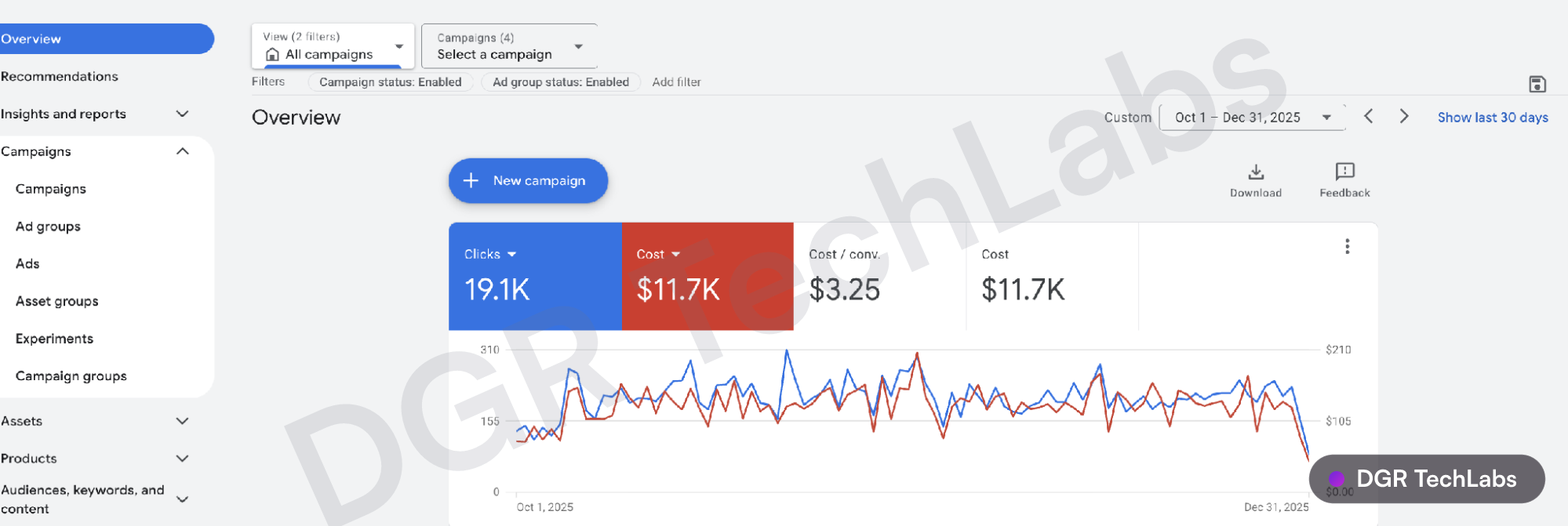
The account achieved the hardest outcome in paid search: profitable scale. Cost per conversion was cut from $6.32 to $3.25, a 48.6% reduction, while clicks more than doubled and spend grew 69%. Crucially, efficiency improved as the account scaled, rather than the usual trade of one for the other.
Every figure below comes from the client's own Google Ads account, comparing the quarter before the work (Jul 1 to Sep 30, 2025) with the quarter after (Oct 1 to Dec 31, 2025). The conversion-volume figure is an estimate derived from spend divided by cost per conversion, so it is directional rather than exact; the cost, clicks and cost-per-conversion numbers are read straight from the account.
The evidence
Pulled straight from the client's own dashboards. Every figure is labelled with its source and date.
Want results like these for your business?